
Tel Aviv’s Park Atidim hosted a UVID DroneTech 2026 session on November 13 devoted to “smart solutions for unmanned air mobility,” bringing together people from aviation, industry, regulation and insurance to discuss the infrastructure and preparations needed to fly drones and other unmanned aircraft in civilian and urban settings.
The business park recently opened what it describes as the first landing pad of its kind in Israel for unmanned aircraft. At the event, it presented itself as a live testing ground for technology and entrepreneurship, led by its CityZone innovation lab. Alongside the talks, the program included a startup exhibition and a networking session.
UVID chairman and founder Alon Unger opened the session, noting that it was the third day of UVID 26 week, whose events drew more than 7,000 people. Park Atidim CEO Eyal Green outlined changes at the park and his plan to develop it into a center for business and innovation, inviting companies and entrepreneurs to use its facilities to develop and test new technologies. “This is definitely the first swallow of a continued fruitful and meaningful collaboration in the world of advanced air mobility,” Green said afterward.
Regulation and airspace monitoring
Moti Shmueli, acting head of the national authority for low-altitude airspace, spoke about the need for a picture of the skies that would help identify threats while allowing civilian drone activity to continue. He described plans to run a UTM airspace management system, publish regulations and improve information sharing with security agencies.
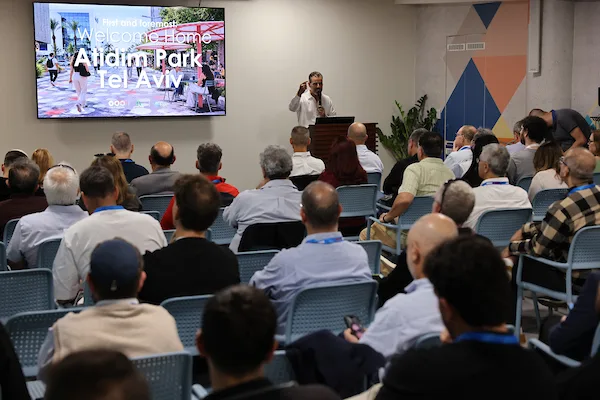
Libi Bahat, head of air infrastructure at the Civil Aviation Authority, described efforts to give police powers to deal with drone threats and a plan to require Remote ID for drones. He said the authority had completed its work on managed airspace for unmanned aircraft and sent it for approval.
Flights, manufacturing and insurance
Ofer Lapid, technology lead of the national drone initiative INDI, said the program has carried out more than 30,000 flights, including under GPS jamming, and that the initiative and industry together have invested tens of millions of shekels in the trials. He described work with authorities on procedures for flying over the city and crossing highways.

Roy Peleg, COO of AIR, presented the company’s aircraft, which weighs about 1.2 tons and can carry 250 kilograms, and said it has received some 4,000 preorders. Nir Raveh of Atis Aviation described a 150-kilogram vertical takeoff and landing aircraft, and Swarmer president Alex Fink spoke about a system for coordinating drones in a swarm. Tal Engel of Howden said aviation insurers will soon have to cover larger fleets, drone swarms and autonomous aircraft carrying heavy cargo or passengers.
Unger said more sessions are planned.